We are looking for a Doctoral Researcher at the Department of Biological and Environmental Science, University of Jyväskylä to join the ’Optogenetic Modules’ group of Heikki Takala. The fully funded position for three years will start on 2 January 2025 or as agreed.
Project description
The group of Heikki Takala studies photoreceptor proteins, especially red light-sensing phytochromes, with a special focus on their application for optogenetics.
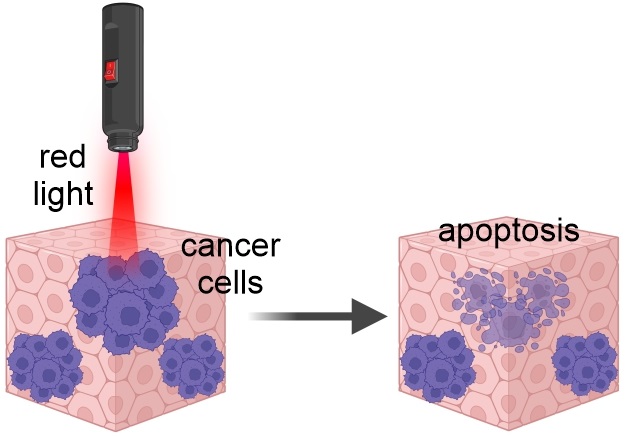
We are seeking a highly motivated person to develop and apply phytochrome-based optogenetic tools in breast cancer cell models in a PhD project entitled ”Red light sensing optogenetic tools and their application for cancer therapy”. Phytochromes are photoreceptor proteins that respond to red/far-red light. To study these responses and apply them to optogenetics in this project, activity assays in bacterial and mammalian cells, as well as biochemical assays with purified protein, will be utilized. The project will develop optogenetic tools that enable red light-induced apoptosis of breast cancer cells (Fig. 1). These tools will be assayed in 2D and 3D cell models for their therapeutic applicability. The project will provide diverse training and experience in the fields of cell and molecular biology, photoreceptor research, and optogenetics.
Figure 1. The project aims to generate tools for red light-induced
apoptosis of cancer cells.
Qualifications
Applicants must have a Master’s degree, or be about to obtain a Master’s degree, in cell and molecular biology, biochemistry, or other relevant discipline. Ideal candidates should have a strong interest in cancer cell models, photoreceptor research, and optogenetics. Preliminary experience with molecular cloning and mammalian cell cultures is considered highly advantageous. A commitment to accuracy and responsible conduct of research is essential. We require strong motivation to write a PhD thesis, excellent collaboration skills, good oral and written English language skills, and ability to work independently in the laboratory.
The duties, qualification requirements and language skills of a Doctoral Researcher are stipulated by the University of Jyväskylä Regulations and language skills guidelines. The MSc degree required for the position must have been completed before starting the position. Doctoral Researcher needs to be also enrolled in the doctoral programme which can be applied from the Faculty of Mathematics and Science after selection for the position.
We offer
Funding for 3 years in the doctoral program of the University of Jyväskylä.
Supervision in all aspects of the work, a highly skilled project team and possibility to join workshops to improve specific skills in e.g. bioinformatics, data analysis.
International, enthusiastic working environment (working language is English) and a large collaborator network
Excellent research infrastructure at Jyväskylä and state-of-the-art scientific equipment, software, access to journals and scientific databases.
Resources for travel to conferences or workshops abroad.
The position will be based at the University of Jyväskylä, where the student will join the PhD programme in Biological and Environmental Science. At the University of Jyväskylä, you are a recognized member of our community with an ample opportunity to be drawn into international research. You get to participate in our international and multidisciplinary community, where everybody’s welfare is essential. You will work in an inspiring and lively campus area and an environment that supports a healthy and active lifestyle.
Finland has a high standard of living with healthcare, free schooling (also in English), affordable childcare, and good family benefits. The city of Jyväskylä is located in central Finland amidst Finnish lakes and has excellent opportunities for different nature, outdoor, and sports activities. It is a major educational center, whose large student population is responsible for a vibrant cultural scene. To find useful information about the University of Jyväskylä, the City of Jyväskylä, and living in Finland, see the University’s Handbook for international staff and visitors
The initial annual salary will be approximately 30,000 EUR (gross income, including a holiday bonus). With progress of the thesis work, the salary will be revised in accordance with the Collective Agreement of Finnish Universities. The employment starts with a trial period of six months.
How to apply
The application documents that should be included in PDF format:
A two-page long Curriculum vitae, composed according to good scientific practice and considering the template for researcher´s curriculum vitae by The Finnish Advisory Board on Research Integrity and including contact information of two academics who can provide reference letters
Max 1-page motivation letter describing your scientific interests and key motivation for applying for this position
A numbered list of publications, if any
Relevant certificates / diplomas (or date of completion the MSc)
For more information, please contact Academy Research Fellow Heikki Takala, heikki.p.takala@jyu.fi.
Apply between 17 October 2024 and 29 November 2024 23:59 (Europe/Helsinki)
Department of Biological and Environmental Science
The research in the Department of Biological and Environmental Science focuses on three core areas: evolutionary biology, natural resources and environment, and biological nanoscience. The Department building, Ambiotica, is an integral part of the University of Jyväskylä’s Ylistönrinne Mathematics and Science Research Complex, which includes buildings of chemistry, physics and nanoscience. Ambiotica houses high quality laboratories for bioscience and experimental facilities for a wide range of biological and chemical analyses as well as highly motivated laboratory personnel.
The University of Jyväskylä is a human-centered environment of 2,500 experts and 14,500 students. Our goal is to create wisdom and wellbeing for all. JYU’s naturally beautiful campus is located in the heart of the city of Jyväskylä. JYU is the third largest employer in Central Finland.
The application form cannot be saved as draft. However, you have 6 hours to complete your application before the timeout. After submitting you can return to edit your application via the link you receive by email. The application can be edited until the application deadline.
AbbVie’S mission is to discover and deliver innovative medicines and solutions that solve serious health issues today and address the medical challenges of tomorrow. We strive to have a remarkable impact on people’s lives across several key therapeutic areas – immunology, oncology, neuroscience, and eye care – and products and services in our Allergan Aesthetics portfolio. For more information about AbbVie, please visit us at www.abbvie.com. Follow @abbvie on Twitter, Facebook, Instagram, YouTube and LinkedIn.
Job Description
MIKÄ SINULLE ON TÄRKEINTÄ TYÖSSÄSI?
Meille tärkeintä on aina ihminen. Potilaat, joiden elämänlaatua ja toimintakykyä hoitomme tukevat. Terveydenhuollon ammattilaiset, joille kehitämme lääketieteen huippua edustavia ratkaisuja. Työntekijät, joille tarjoamme merkityksellistä työtä.
AbbVie on osaavien ihmisten yhteisö. Sinä tuot siihen oman arvokkaan panoksesi ja saat tilaisuuden oppia muilta huippuammattilaisilta. Yhteisöllinen yrityskulttuurimme hyväksyy ihmiset yksilöinä ja tukee jokaisen henkilökohtaista kehittymistä.
Onnistumisestamme työyhteisönä kertoo omalta osaltaan sijoittumisemme vuosi vuoden jälkeen parhaiden joukkoon Great Place to Work -tutkimuksessa.
Nyt etsimme Lääketieteelliselle osastollemme sinua asiakaslähtöinen, kokenut
MEDICAL ADVISOR
osaksi Onkologia-tiimiämme.
AbbVien portfolio kasvaa lähitulevaisuudessa uusien onkologisten hoitojen ja käyttöaiheiden myötä. Vastuullasi on perehtyä syvällisesti uusien sairauksien hoitoon, luoda tieteellisiä suhteita uusiin asiakasryhmiin sekä yhteistyössä market accessin kanssa tukea uusien valmisteiden/käyttöaiheiden markkinoille pääsyä.
Vastuullasi on myös tuottaa ja jakaa lääketieteellistä tietoa sekä antaa tieteellistä tukea sekä ulkoisille että sisäisille asiakkaille. Olet tiiviisti yhteydessä asiakkaisiimme ja rakennat kontakteja kyseisen terapia-alueen asiantuntijoihin Suomessa. Toimit yhteistyössä AbbVien tiimin ja terveydenhuollon ammattilaisten kanssa hoitokäytäntöjen parantamiseksi. Varmistat pysyväsi alan tuoreimman tiedon tasalla seuraamalla tieteellisiä julkaisuja sekä osallistumalla kongresseihin ja seminaareihin. Ymmärrät modernin Medical Affairs -työskentelyn pääpiirteet ja olet halukas rakentamaan uusia yhteistyötapoja sekä kehittämään itseäsi ja tiimisi toimintaa alati muuttuvassa toimintaympäristössä. Työskentelet tiiviissä yhteistyössä lääketieteellisen osaston kollegojen, myynti- ja markkinointiosaston sekä Market Accessin kanssa. Raportoit Onkologian ja Hematologian Head of Medical Affairsille.
Qualifications
Odotamme sinulta kokemusta lääkealalta sekä jatkuvasti muuttuvan lääkealan ympäristön tuntemusta. Tehtävä edellyttää lääketieteellistä, luonnontieteellistä tai muuta soveltuvaa ylempää korkeakoulututkintoa sekä vahvaa tieteellistä orientaatiota. Taustaltasi voit olla esimerkiksi lääkäri, proviisori tai biotieteiden asiantuntija.Tieteellinen jatkokoulutus on edellytys tehtävässä menestymiselle.
Aikaisempi tuntemus syöpäsairauksien, erityisesti gynekologisten syöpien hoidosta katsotaan eduksesi. Itsenäisen ja ennakkoluulottoman työskentelyn ohella tarvitset vahvoja vuorovaikutus- ja tiimityöskentelytaitoja sekä valmiutta toimia matriisiorganisaatiossa. Oleellisen tiedon hahmottaminen alan tutkimusartikkeleista ja kirjallisuudesta sekä tiedon selkeä ja ymmärrettävä kommunikointi suomeksi ja englanniksi mahdollistavat työssä menestymisen. Olet kiinnostunut työskentelemään kaupallisessa ympäristössä ja vaikuttamaan potilaiden hoitoon yhteistyössä alan asiantuntijoiden kanssa. Olet parhaimmillasi uusien mahdollisuuksien edessä. Arvostamme myös ymmärrystä suomalaisesta terveydenhuolto- ja rekisteritutkimusympäristöstä. AbbVie tarjoaa innostavan ympäristön, osaamista ja kokemusta RWE-tutkimusten toteuttamisesta sekä mahdollisuuden päästä tuottamaan tutkimustietoa suomalaisista potilaista ja hoitokäytännöistä omalla terapia-alueellasi.
Tarjoamme sinulle laaja-alaisen tehtävän, jossa pääset vaikuttamaan vastuullisella ja merkityksellisellä toimialalla osana menestyvää kansainvälistä yritystä. Tueksesi saat osaavat kollegat ja dynaamisen työyhteisön. Tuemme oppimista ja tarjoamme mahdollisuuden kehittyä ja kehittää osaamista työssäsi.
Additional Information
Kiinnostuitko? Lisätietoja tehtävästä antaa Head of Medical Affairs, Oncology & Hematology Johanna Lammela, puh. 040 9022 478, 15.10. klo 13-15 ja 21.10. klo 13-15. Täytäthän hakemuksesi palkkatoiveella varustettuna sekä CV:si rekrytointijärjestelmäämme viimeistään 23.10.2024 mennessä.
AbbVie on yksi maailman suurimmista lääkeyrityksistä, joka kehittää hoitoja vakaviin sairauksiin, keskittyen immunologisiin ja neurologisiin sairauksiin, onkologiaan ja hematologiaan sekä silmäsairauksiin. Tavoitteemme on parantaa vakavien sairauksien kanssa elävien ihmisten elämänlaatua. Terveydenhuollon ammattilaisille tavoitteenamme on tarjota lääkeluokkansa parhaita tai uusia vaikutusmekanismeja hyödyntäviä ratkaisuja. Haluamme olla lääkealan paras ja kiinnostavin työpaikka. Suomessa työntekijöitä on noin 100 ja toimistomme sijaitsee Pasilassa. Potilaskeskeinen ajattelumme kiteytyy mottoomme ’Aina ihminen’.
AbbVie is an equal opportunity employer and is committed to operating with integrity, driving innovation, transforming lives, serving our community and embracing diversity and inclusion. It is AbbVie’s policy to employ qualified persons of the greatest ability without discrimination against any employee or applicant for employment because of race, color, religion, national origin, age, sex (including pregnancy), physical or mental disability, medical condition, genetic information, gender identity or expression, sexual orientation, marital status, status as a protected veteran, or any other legally protected group status.
The Medical Scientific Reviewer will support the Medical and Scientific Affairs Team by managing the review processes within the Clinical Sequencing Division (CSD) at Thermo Fisher Scientific. CSD enables Precision Medicine worldwide by delivering effective sequencing solutions for clinical and translational research. As we expand, we support clinical validity studies and generate evidence at both local and global levels. Our goal is to advance molecular diagnostics by improving understanding and communication in this rapidly evolving field. The candidate will play a key role in reviewing scientific and medical documents, ensuring regulatory compliance, handling contracts, and applying oncology expertise to support product development and commercialization.
Key Responsibilities:
Document Review Management: Conduct detailed reviews of scientific, medical, and promotional documents. Ensure consistency, scientific accuracy, and compliance with regulations and guidelines.
Regulatory/Legal Compliance: Act as the point of contact for regulatory and legal teams. Ensure all documents and processes meet requirements (e.g., Sunshine Act, MedTech Code) and comply with diagnostic standards, especially in oncology.
Scientific Expertise (Oncology/Pathology): Apply medical or related field knowledge to review and interpret clinical data, research findings, and diagnostic information. Ensure scientific accuracy and relevance.
Contract Management: Manage contracts by reviewing, negotiating, and ensuring legal and regulatory compliance. Collaborate with internal teams to ensure timely and accurate contract execution related to research, clinical studies, and partnerships.
Quality Assurance: Participate in quality assurance activities. Review protocols, clinical study reports, scientific papers, and contracts for accuracy and adherence to regulatory guidelines.
Process Improvement: Identify areas for improvement in the review process. Develop and implement strategies to boost efficiency while maintaining high-quality standards.
Minimum Requirements/Qualifications:
Bachelor’s or advanced degree in Oncology, Molecular Biology, Biochemistry, or a closely related field.
Experience in medical/scientific review, global regulatory compliance, and contract management within diagnostics or pharmaceuticals.
Strong knowledge of oncology diagnostics and related scientific principles.
Proficiency in contract review and management in a scientific or medical setting.
Ability to thrive in a fast-paced, multidisciplinary environment, with excellent attention to detail.
The HiLIFE – Institute of Biotechnology and the Faculty of Biological and Environmental Sciences at the University of Helsinki are announcing several open positions in three different research groups at the University of Helsinki Viikki campus.
Project Description
Three research groups jointly announce open positions in the following project areas 1) structural virology, 2) structural parasitology in the area of mitochondrial supercomplexes and protein translation 3) antiviral inhibitors of protein secretion and 4) novel molecular glue activators of cell-protective stress pathways. The projects will be housed at the University of Helsinki Viikki campus in the groups of Prof. Sarah Butcher (project #1), Group Leader Dr. Alexander Mühleip (project #2) and Research Director Dr. Ville Paavilainen (projects #3-4). All of the positions will be affiliated with a single research group with more detailed project descriptions below. All of the participating groups are located in the same building with shared group meetings and high synergy, including many ongoing collaborative projects. As a result, the selected people will benefit from a highly synergistic and collaborative environment.
Project #1: Sarah Butcher
The HiLIFE – Institute of Biotechnology and the Faculty of Biological and Environmental Sciences at the University of Helsinki, renowned for its international research excellence, is excited to announce openings for both a postdoctoral researcher and a PhD researcher to join the group of Prof. Sarah Butcher.
Our research focusses on pathogen-host interactions. The successful postdoctoral researcher will join the new Horizon Europe consortium, REFINE to work on West Nile virus entry, inhibition, and prevention, using molecular biology, and structural virology with an emphasis on reconstitution of membrane proteins, virus-antibody interactions, single-particle cryo-EM and image reconstruction. The successful PhD researcher will join the new COMBAT VIRUS project funded by the Jane and Aatos Erkko Foundation, to work on vaccine development for picornaviruses and characterisation of antiviral molecules. The work will involve primarily single particle cryoEM and image reconstruction. We lead the University of Helsinki cryoEM facility and will give training on all of the relevant techniques, using the in-house 200-kV Talos Arctica microscope fitted with a Falcon 4i camera. Computational resources are provided by the national supercomputer center.
About You
you are an ambitious, goal-oriented, team player, motivated to tackle challenging new projects
you are trained in structural biology and virology
a background in protein or virus purification is desirable
commitment to scientific excellence as demonstrated by a strong publication record
excellent command of English to fit into our international group
strong communication, social, and time management skills
What We Offer
a fixed-term 4-year position with a 6-month trial period (PhD position open immediately until filled, postdoctoral position open from March 2025)
a collaborative, innovative and inclusive work environment
performance-related salary (job demands level 2-4 for PhD researcher, level 5 for postdoctoral researcher), 5-7 weeks of annual leave, flexible working hours
financial support with Finnish visa and residency permits, if applicable
occupational health care, access to high-quality sports facilities and language classes
Project #2: Postdoctoral Researcher in structural mitochondrial biology
The HiLIFE – Institute of Biotechnology at the University of Helsinki, renowned for its international research excellence, is excited to announce an opening for a postdoctoral researcher or PhD graduate student to join the group of Dr. Alexander Mühleip.
Project Description
The research of the group is focused on understanding how protein complexes organise mitochondrial membranes in protozoan parasites and when disrupted by human mitochondrial disorders. The successful applicant will work on the structural and functional characterisation of protein complexes involved in mitochondrial energy conversion and translation in protozoan parasites using protein biochemistry, single-particle cryo-EM and in-situ cryo-electron tomography with subtomogram averaging. Specifically, the project is aimed at visualisation of inner-membrane architecture and characterising parasite-specific modulation of membrane biogenesis. The candidate will also have the opportunity to study the structural basis for inhibition of mitochondrial translation in Toxoplasma gondii in collaboration with leading expert Prof. Lilach Sheiner (University of Glasgow). The project offers the unique opportunity to combine parasitology and mitochondrial biology with state-of-the-art structural biology techniques. The group benefits from in-house availability of a 200-kV Talos Arctica microscope, complemented by access to 300-kV cryo-electron microscopes for data collection at international facilities.
About You
you are ambitious, goal-oriented, collegial and motivated to tackle challenging new projects
prospective PhD and postdoctoral researchers should be in the final stages of their thesis submission) in an area of structural biology
prior experience structural biology is critical, a background in electron cryo-tomography and subtomogram averaging is a strong asset
skills in computational protein structure and cryo-EM data processing are desirable
a background in protein purification is desirable
commitment to scientific excellence as demonstrated by a strong publication record
excellent command of English (working language at the institute)
strong communication, interpersonal, organizational and time management skills
What We Offer
a fixed-term 3-year position with possible extension, expected opening for all positions either late Autumn 2024 or beginning of 2025.
a collaborative, innovative and inclusive work environment
support and mentoring for postdoctoral fellowship applications (EMBO, Marie-Curie etc.)
a competitive salary depending on your qualifications and personal performance, 5-7 weeks of annual holiday leave, flexible working hours
financial support with Finnish visa and residency permits, if applicable
occupational health care and access to high-quality sports facilities
Project #3: Postdoctoral Researcher in structural biology
The HiLIFE – Institute of Biotechnology at the University of Helsinki, renowned for its international research excellence, is excited to announce an opening for a postdoctoral researcher or PhD graduate student to join the group of Dr. Ville Paavilainen.
Project Description
The current research in the group has two directions with recent funding from the European Union and US National Institutes of Health. The overall goal of the group is to understand basic mechanisms of protein biogenesis, particularly within the early secretory pathway and in the membrane of the mammalian endoplasmic reticulum. Ongoing drug discovery efforts to target ER protein biogenesis in a client-selective manner are aimed for diseases such as cancer and inflammatory conditions. Here, one project is to study how client-selective inhibition of secretory protein biogenesis could be pursued as a new antiviral strategy against viruses such as Ebola. In the second project, we aim to develop new small molecule tools to activate specific ER stress responses as a cell-protective strategy with relevance to neurodegenerative conditions, including Parkinson’s and Altzheimer’s diseases. This work involves structural biology and biophysical experiments to characterize molecular glue mechanisms with their target proteins in collaboration with synthetic chemistry partners. Both projects take advantage of state-of-the-art structural biology methods, including cryo-EM and X-ray crystallography, chemical biology approaches as well as biophysical studies. The group benefits from in-house availability of a 200-kV Talos Arctica microscope, complemented by abundant access to 300-kV cryo-electron microscopes for data collection at international facilities as well as modern X-ray sources in-house as well as frequent access to European synchrotron sources as part of a Finnish block allocation group.
About You
you are ambitious, goal-oriented, collegial and motivated to tackle challenging new projects
PhD degree (or be in the final stages of PhD submission) in an area of structural biology, for example using X-ray crystallography or cryo-EM approaches, including atomistic modelling of macromolecules.
Prior experience in computational protein structure analysis
high interest in learning structural biology methods (comprehensive cryo-EM training will be provided)
Experience in protein purification is preferable
commitment to scientific excellence as demonstrated by a strong publication record
excellent command of English (working language at the institute)
strong communication, interpersonal, organizational and time management skills
What We Offer
a fixed-term 3-year position with possible extension
a collaborative, innovative and inclusive work environment
support and mentoring for postdoctoral fellowship applications (EMBO, Marie-Curie etc.)
a competitive salary depending on your qualifications and personal performance, 5-7 weeks of annual holiday leave, flexible working hours
financial support with Finnish visa and residency permits, if applicable
occupational health care and access to high-quality sports facilities
General info
How to apply?
Welcome with your application in English (click the ‘apply’ link), as soon as possible or no later than November 7th, 2024. Please note that applications will be continually reviewed. The position is available immediately or according to mutual agreement. Applications should include a cover letter, CV, and contact details of three references. For further information on the position, please contact the group leaders Prof. Sarah Butcher (sarah.butcher@helsinki.fi), Dr. Alexander Mühleip (alexander.muhleip@helsinki.fi) or Dr. Ville Paavilainen (ville.paavilainen@helsinki.fi).
Further Degree Requirements
Further degree requirement for doctoral researcher position: The appointee must apply, and obtain, the right to pursue a doctoral degree at the University of Helsinki within the probationary period of 6 months: https://www.helsinki.fi/en/admissions-and-education/apply-doctoral-programmes/how-apply-doctoral-education
Further degree requirement for postdoctoral position: The degree requirement must be met by the beginning of the employment.
About The Institute Of Biotechnology, HiLIFE, University Of Helsinki
The Institute of Biotechnology is an independent research institute within the Helsinki Institute of Life Science (HiLIFE) , at the University of Helsinki , Finland, and at the global forefront of life science research with state-of-the-art research core facilities in genomics, biological imaging and structural biology. According to the 2024 Times Higher Education World University survey, the University of Helsinki is ranked among the top 80 universities world-wide in life science research. The University of Helsinki is committed to providing a welcoming environment for international researchers , offering comprehensive services and support for relocating to Finland—a country known for its high quality of life, excellent education system, and robust support for research and innovation.
The University of Helsinki welcomes applicants of any gender and age, linguistic or cultural background, or minority group.
Click this link to read about accessibility and inclusivity at our University.
iCANDOC Precision Cancer Medicine doctoral education pilot invites applications for a part-time (50%) senior researcher position to operate in the directoral / managerial duties in the pilot.
The iCANDOC pilot aims to train 122 doctoral researchers at the University of Helsinki (UH) in Precision Cancer Medicine during 2024-2027 with a total budget of 31 M€. We are currently seeking an applicant to operate in directorial/managerial duties for the iCANDOC Precision Cancer Medicine doctoral education pilot.
The applicant ensures this exceptional pilot project reaches its goals. The applicant works as a member of the iCANDOC community of doctoral researchers, supervisors, and post-doctoral researchers and collaborates closely with the participating faculties/units, doctoral programs and the UH Doctoral School.
Task Description
The iCANDOC applicant is responsible for execution of the iCANDOC doctoral pilot at UH during 2024-2027 according to UH guidelines, UH Doctoral Pilot Board decisions, and iCANDOC UH Steering Board decisions and in collaboration with the UH Doctoral School, doctoral programs, and participating faculties/units. To this end the applicant acts as the presenter of matters for the iCANDOC UH Steering Board, which decides on iCANDOC-UH principles including use of funding among several units; alignment of practices at different faculties and doctoral programs and nomination of iCANDOC staff and working group. The appilicant also interacts actively with the iCANDOC and iCAN flagship community to facilitate organization of courses, seminars, and meetings in Precision Cancer Medicine as well as secondment opportunities among potential future employees. The applicant together with the iCANDOC staff identifies and attempts to resolve any barriers to the execution of iCANDOC. The University of Helsinki is the coordinating university for the national iCANDOC pilot and therefore the applicant is also in charge of organizing meetings of the National iCANDOC Steering Group with representatives from all 14 participating organizations. The applicant supervises the iCANDOC staff including a coordinator, a scientific coordinator and supported by the iCANDOC post-doctoral program participants. At the beginning tasks also involve helping in the selection processes of doctoral researchers and their onboarding.
The director is appointed by the Dean of the Faculty of Medicine based on agreement on the appointment in the iCANDOC Steering Board.
About You
Prerequisites for the position are a doctoral degree, evidence of scholarly research work, the teaching skills necessary for the position and the ability to manage a research group and obtain supplementary research funding. The optimal candidate is an active scientist in the iCANDOC area, and has demonstrated skills in executing large and complex projects. Good communication and collaboration skills and a detail-oriented and analytical approach to problem-solving are appreciated. Strong written and oral English skills are required, and Finnish skills are considered an advantage.
The part-time appointment (minimally 50%, negotiable) enables carrying out independent research in the iCANDOC area. The appointment will be on a fixed-term basis until the end of 2027. The salary will be based on level OPT 6-7 of the demands level chart for research and teaching personnel in the salary system of Finnish universities. A six-month trial period will be applied.
The University of Helsinki offers comprehensive services to its employees, including occupational health care and health insurance, unemployment and pension fund, a generous holiday package, sports facilities, and opportunities for professional development.
How To Apply
Please submit your cover letter and CV as A SINGLE PDF FILE in English using the University of Helsinki Recruitment System.
The University of Helsinki welcomes applicants from a variety of genders, linguistic and cultural backgrounds.
The closing date for applications is October 17, 2024 at 23:59 EEST.
Further information about the position can be obtained from officiating iCANDOC director, professor Tomi Mäkelä, +358-50-5286128, icandoc-info@helsinki.fi. For information on the recruitment process, please contact HR Specialist Anna Leppäkoski, anna.leppakoski(at)helsinki.fi.
Recruitment system support: rekrytointi(at)helsinki.fi
The University of Helsinki (https://www.helsinki.fi/en ) is an international scientific community of 40,000 students and researchers. It is one of the leading multidisciplinary research universities in Europe.
iCANDOC is a national doctoral education pilot in the area of the Research Council of Finland’s flagship project, iCAN – Digital Precision Cancer Medicine. It is funded as part of the Ministry of Education and Culture’s doctoral education pilot for 2024-2027. The goal is to develop and test a new, flexible program for 3-4 year doctorates by enhancing supervision practices and initiating doctoral studies already during an MD/Master’s program. Furthermore, the pilot aims to increase the mobility of trainees among partners and smoothen transitions to multiple career tracks.
Oncology Research at Orion is seeking an innovative, talented, and highly motivated team leader to guide a team of researchers and assistants working to identify, validate, and mechanistically characterize novel oncology targets, as well as to support preclinical drug discovery efforts to develop life-changing therapies.
About The Position
As the Head of Cancer Genomics, you will lead a team focused on identifying novel cancer vulnerabilities using genetic and molecular data. You will leverage innovative in vitro and in vivo model systems, along with a broad range of functional technologies such as CRISPR, RNAi, and small molecule approaches. This role is ideal for someone who enjoys the translational aspects of converting biology discoveries in cancer research into drug discovery programs and thrives in a team environment. Key Responsibilities include the following:
Lead a team of assistants and PhD and non-PhD level scientists providing scientific and technical guidance.
Develop and execute strategies for target identification, prioritisation, and validation. Apply genetic, biochemical, and cell biology techniques for detailed mechanistic studies of identified targets.
Lead the setup and execution of relevant assays and models for in vitro and in vivo screening and efficacy studies.
Drive the innovation and implementation of new techniques and methodologies to advance research projects.
Develop action plans, strategies, and go/no-go criteria at each stage of the drug discovery process.
Interact with internal and external experts, academic groups, and CROs to establish collaborations and support research projects.
Ensure delivery of a robust pipeline of high-value, high-confidence research projects
You will be based in Turku, Finland, and report to the Director of Oncology Research.
Description Of Unit
Orion’s pharmaceutical innovations are created within its R&D organisation. The organisation employs top professionals in the field of drug discovery and development.
There are around 400 professionals working in R&D. Orion R&D has offices in Espoo, Turku and Kuopio in Finland, and in Nottingham in England and in New York, NY, USA.
Cancer Genomics is one of three scientific units in Oncology Research, a part of Orion’s R&D Organization. Cancer Genomics Team is focused on the discovery of therapeutic targets and the development of life-changing therapies to build well-being of patients globally.
We Offer
Opportunity to work with a dynamic team of experts building up Oncology Research at Orion.
A highly interesting R&D pipeline and enthusiastic working environment with opportunities to use your own strengths to build your competence and career.
Exciting opportunity to innovate and have an impact on future therapies for patients.
An excellent working atmosphere based on the appreciation of colleagues, continuous development, and mutual trust. Learn more about Orion as an employer https://www.orion.fi/en/careers/orion-as-an-employer/.
Requirements
A doctoral degree in Cell Biology, Molecular Biology, Biochemistry, or a related field with more than six years of post-doctoral experience in oncology research.
Deep understanding of the mechanisms driving cancer growth, synthetic lethal strategies, and experience in using genomic information and functional genomics data for identifying novel cancer dependencies, along with the integration and utilisation of large-scale multi-omic datasets.
Proficiency in a broad range of biochemical, molecular, and cell biological techniques, including
Expertise in in vitro and in vivo cancer models and cell proliferation assays.
Functional genomic techniques, such as RNAi and CRISPR.
Cell-based assays, including immunofluorescence and high content imaging.
In vitro high-throughput biochemical screening assays using recombinant proteins.
Good leadership and team management skills and demonstrated ability to drive projects to successful completion.
Candidates with experience in the pharmaceutical or biotechnology industry will be given preference.
Additional Information
If you are the person we are looking for, please submit your cover letter and CV via the link by 27th October 2024.
For more information on the Head of Cancer Genomics position, please contact Anu Moilanen, Director Oncology Research, tel. +358 50 966 7827 the following times: October 22nd, 16-17:00 EEST or Oct 24th 10-11 EEST.
Approved medical examination which also includes drug testing is required prior to the employment. We will also carry out a security clearance prior to the employment for the selected person. Orion Corporation operates in more than 30 countries, where we Orionees, 3600 in total, work in all kinds of positions. Among us there are Research Scientists, Laboratory Technicians, Engineers and IT Specialists as well as people working in Production, just to mention some examples. We offer diverse and responsible jobs to our personnel in a truly multi-disciplinary work environment. We encourage people to develop their competences and offer opportunities to affect the job description and creating their own career path at Orion. We are searching for top talents who are ready to share our passion for the work that we do.
Aalto University is a community of bold thinkers where science and art meet technology and business. We are committed to identifying and solving grand societal challenges and building an innovative future. Aalto has six schools with nearly 11 000 students and a staff of more than 4000, of which 400 are professors. Our main campus is located in Espoo, Finland. Diversity is part of who we are, and we actively work to ensure our community’s diversity and inclusiveness in the future as well. This is why we warmly encourage qualified candidates from all backgrounds to join our community.
Two Doctoral Researchers in Super-Resolution Microscopy and Single Molecule Tracking
The project will investigate the biophysical mechanisms of cellular adaptation to environmental stresses and developing new methods to quantify and understand single molecule dynamics.
Many microorganisms can withstand severe environmental stresses, e.g. extreme temperatures, while maintaining cellular homeostasis and sub-cellular organization. To study this, we use state-of-the-art super-resolution microscopy and single molecule tracking to record the movement of individual molecules inside individual live cells. Single molecule dynamics reports on the molecular interactions in real-time, acting as a probe for changes in the cellular environment. The obtained knowledge will help us to understand microorganisms’ adaptation to different environments and the limits of cellular life. The research will also contribute to the development of synthetic biology applications and novel assay solutions.
Your role and goals We are looking for an enthusiastic and motivated doctoral researchers who are interested in applying and/or analyzing data from super-resolution microscopy and single particle tracking to study intracellular life of bacteria. You will contribute to some of the following areas: experimental work in the laboratory, imaging using a custom TIRF microscope, data analysis, machine learning, and modelling. You will adapt existing and develop novel methods and protocols to collect and analyse scientific data from a variety of sources so that hypotheses can be tested, reviewed and refined. You will also carry out collaborative projects with colleagues within our group and from other institutions. You are proactive, self-directed researcher who manages your projects effectively and presents the results at internal and external meetings and seminars.
You will work full time on the doctoral research and to complete the thesis and the associated studies in four years. The doctoral degree consists of the student’s research project resulting in peer-reviewed publications, studies specific to the research field, as well as transferable skills training.
Your network and team The Department of Neuroscience and Biomedical Engineering (NBE) aims to understand system-level dynamic functions of the human brain, mind, and body. We develop spearheading technology and computational methods which pave the way for discoveries and breakthroughs that contribute to health and wellbeing. NBE brings together systems and cognitive neuroscience, biophysics, and biomedical engineering. The levels of description in the research and education at the department range from molecular and cellular measures to noninvasive neuroimaging and behavioral measurements. New generations of multidisciplinary scientists and engineers are educated by engaging them with cutting-edge science and technology.
Your supervisor will be Assistant Prof. Jarno Mäkelä who is the head of the Single-Molecule Dynamics in Cells group. He has assembled a multidisciplinary team of experts in microbiology, biochemistry, microscopy, biophysics, and computer science, providing a collaborative environment for researchers to gain hands-on experience in cutting-edge microscopy, experimental lab work, data analysis and modelling. The team works on multiple topics at the interface of physics, chemistry, and biology: intracellular spatial organization, macromolecular crowding, liquid-liquid phase separation, heat- and cold-shock protein dynamics, and proteomics. You will be embedded in a highly supportive and stimulating research environment, where you will have the opportunity to receive excellent academic training and develop key skills for the future as an independent researcher.
Your experience and ambitions
MSc in biophysics, biotechnology, computational biology, or other relevant fields
Solid understanding of biology
Experience with at least one of the following is expected: fluorescence microscopy, signal processing, image analysis, machine learning or mathematical modelling
Coding skills (Python/Matlab or similar) to process and analyze experimental data
Ability and interest to work results-oriented in an interdisciplinary team
High self-motivation and persistence in tackling challenging scientific problems
Good written and oral communication skills in English (Finnish language is not required).
The Doctoral researcher applicants must fulfill the admission requirements for the Aalto Doctoral Programme in Science. Selected candidate is expected to apply for and to be granted a right to pursue doctoral studies at Aalto University. More information on the general requirements and the Doctoral Programme in Science https://www.aalto.fi/en/study-options/aalto-doctoral-programme-in-science-0 Please check the student information, admission criteria and pay attention to the required (English) language proficiency.
What we offer We offer you an interesting job in an inspiring work environment. You will be able to work in a community where we promote personal growth, collaborative atmosphere, transparency in communication. We will familiarize you with your tasks and you will be part of a friendly and competent team that will provide you with support for your work tasks, also in the future.
The total duration of Ph.D. studies is four (4) years. Following the standard Aalto’s practice the Doctoral reserarcher position contract will be made initially for two years, then extended to another two years after a successful mid-term progress review.
Aalto University follows the salary system of Finnish universities. The starting salary of the selected doctoral resercaher in this project is approximately 2746 EUR/month (gross), and it will increase with achievements, such as scientific publications.
The position will be full time and the annual workload of research and teaching staff at Aalto University is 1612 hours. The contract includes Aalto University occupational healthcare. We value work-life balance and the well-being of all team members.
In addition, Aalto University offers a vast array of professional development opportunities, which means you will grow and learn, having the chance to participate actively in staff trainings and development projects based on your interests and needs.
The primary workplace is Otaniemi campus at Espoo, Finland, which is a thriving and connected community of 100 nationalities, 13,000 students and 4,500 employees. Life at the transformed campus is vibrant and filled with amazing architecture, calming nature, and a variety of cafes, restaurants, services and good connections.
Ready to apply? To apply, please submit the following application materials in English (PDF files) through our recruitment site (”Apply now!”)
Letter of motivation (clearly describe of your research interests, how you would contribute to the project, and how you fulfill the above-listed requirements)
CV (max 2 pages) including a list of publications
Study transcript provided by the applicant’s university that lists studies completed and grades achieved
Degree certificates
Contact details of at least two referees
The deadline for applications is 31 October 2024 (Finnish time, UTC +2h ).
Please note: Aalto University’s employees should apply for the position via our internal HR system Workday (Internal Jobs) by using their existing Workday user account (not via the external webpage for open positions). Aalto University’s students and visitors should apply as external candidates with personal (not aalto) email.
The position will be filled as soon as a suitable candidate is identified.
For additional information, kindly contact Prof Jarno Mäkelä (jarno.p.makela@ aalto.fi). Recruitment system related matters you may contact HR partner Jenni Ståhl jenni.stahl at aalto.fi.
Aalto University reserves the right for justified reasons to leave the position open, to extend the application period, reopen the application process, and to consider candidates who have not submitted applications during the application period.
We will go through applications, and we may invite suitable candidates to interview already during the application period. We aim to have a transparent and equal recruitment process, so feel free to ask us for feedback.
More about Aalto University: Aalto.fi twitter.com/aaltouniversity facebook.com/aaltouniversity instagram.com/aaltouniversity Aalto University has been awarded with HR Excellence in Research quality label in European Commission, guaranteeing that we adhere to top quality HR practices in both recruitment and employment relations.
Our Customer Charles River Discovery is recruiting Manager / Senior Manager, Oncology to set up and lead their oncology research team in Kuopio, Finland.
Read from below how Charles River describes this interesting role.
For over 75 years, Charles River employees have worked together to assist in the discovery, development and safe manufacture of new drug therapies. When you join our family, you will have a significant impact on the health and well-being of people across the globe. Whether your background is in life sciences, finance, IT, sales or another area, your skills will play an important role in the work we perform. In return, we’ll help you build a career that you can feel passionate about.
We are expanding our operations and therefore, we are now looking for a Manager / Senior Manager, Oncology to strengthen our drug development services. In this senior position, you will manage the planning and execution of our new therapy adaption project. You will be ensuring that all project related activities are performed in accordance with our policies, contractual agreements, quality standards, health and safety requirements, financial targets as well as schedule commitments.
This role requires both strong people leader experience and efficient establishment and project management skills. You master high-level design, management, and execution of multiple parallel projects to drive preclinical service program development. The position is permanent and full-time. Please note that this role requires your presence in Kuopio.
What you should bring with you:
MSc/PhD in Life Sciences or equivalent degree
Proven, vast track record of similar role(s) in the field of oncology and/or pharmacology
Clear and efficient communication skills in both English and Finnish
Strong attention to detail, ensuring accuracy and quality in deliverables
Capability to develop work practices and to take lessons learned and implement them into the processes
Ability to work under pressure to deliver the projects with time, cost, and quality
Analytical and problem-solving mindset, with the ability to identify and mitigate risks and challenges
Ability to adapt to changing priorities and work under tight deadlines and excellent collaboration and work multinational team
We offer you:
Working at Charles River means working in a dynamic international organization where we are making the difference. We offer you exciting projects, growth opportunities, meaningful work, inclusive and supportive team. We also support your wellbeing by offering you e.g., wide occupational healthcare, leisure accident insurance and ePassi flex- benefit. We also have an active recreational committee which organizes activities from charity occasions to fun team events.
Applications and more info:
Please send your application with CV by 20th October to our recruitment system. Please note that email applications are not taken into account.
Päivi Meltan (+358 50 351 8855) is the recruitment consultant taking care of this recruitment at Satafarma & Greige Oy and she is happy to give more information about the role. You will reach Päivi on 10th Oct 15.00- 17.00 or on 15th Oct 11.00-12.00
About Discovery Discovery from Charles River is industry-proven in the successful development of novel therapies, with over 320 patents and 74 preclinical drug candidates delivered to our sponsors in the past 17 years. Backed by more than 650 scientists, our comprehensive, integrated portfolio employs the latest technology and platforms to provide chemistry, biology, and pharmacology services that support clients from the earliest stages of hit identification all the way through to IND. Our client-focused, collaborative approach creates true partnerships that anticipate challenges, overcome obstacles, and move us forward together on the journey of getting new drugs to market.
About Charles River Charles River is an early-stage contract research organization (CRO). We have built upon our foundation of laboratory animal medicine and science to develop a diverse portfolio of discovery and safety assessment services, both Good Laboratory Practice (GLP) and non-GLP, to support clients from target identification through preclinical development. Charles River also provides a suite of products and services to support our clients’ clinical laboratory testing needs and manufacturing activities. Utilizing this broad portfolio of products and services enables our clients to create a more flexible drug development model, which reduces their costs, enhances their productivity and effectiveness to increase speed to market.
With over 22,000 employees within 100 facilities in 26 countries around the globe, we are strategically positioned to coordinate worldwide resources and apply multidisciplinary perspectives in resolving our client’s unique challenges. Our client base includes global pharmaceutical companies, biotechnology companies, government agencies and hospitals and academic institutions around the world.
At Charles River, we are passionate about our role in improving the quality of people’s lives. Our mission, our excellent science and our strong sense of purpose guide us in all that we do, and we approach each day with the knowledge that our work helps to improve the health and well-being of many across the globe. We have proudly supported the development of 86% of the drugs approved by the FDA in 2021.
Agilent inspires and supports discoveries that advance the quality of life. We provide life science, diagnostic and applied market laboratories worldwide with instruments, services, consumables, applications and expertise. Agilent enables customers to gain the answers and insights they seek –– so they can do what they do best: improve the world around us. Information about Agilent is available at www.agilent.com.
Do you have experience with technologies and applications in Genomics, Pathology and Cell Biology and are you looking to further develop your career? Then you might be the person we are looking for!
Agilent Technologies are currently looking for a driven and motivated team player to join as a HDX (Human Diagnostics) Market Specialist for Regions: Denmark/Sweden/ Norway/ Finland
As a Market Specialist , you will be a part of an European Team of Market Specialists, which is closely embedded into the European DGG sales structure. In this critical role, you will apply your expertise and knowledge of the DX market to work with healthcare diagnostic accounts, supporting the sales team in your region, doing Business Development by promoting new applications, uncovering emerging applications in the field of HDx, identifying new customer groups and closely interact with the Marketing and the Business Units of Agilent.
Your primary responsibilities are our suite of genomics and pathology products, instruments and software solutions for immunohistochemistry, molecular pathology and human genetics. Your goal is to proactively develop and implement a successful strategy together with your colleagues from the sales and support teams , to help the organization in exceeding quota and develop new opportunities and strategies for the coming years.
Specifically, this means:
Develop effective strategies and tactics to grow new business
Effectively prospect to find new opportunities in existing and new accounts
Leverage deep knowledge of strategic focus area to develop compelling value proposition
Recognize trends that impact buying of Agilent products
Provide front-line support to HDx Account Managers with persuasion activities
Partner with Account Managers to assist with seminars and negotiations
Qualifications
Bachelor or Master degree or University degree in Biology/Biochemistry/Chemistry (or related)
4+ years practical experience in a relevant environment
Excellent communication skills in Danish or Swedish and English (written and verbal)
You’ve established a proven track record and you are looking for new challenges in the health care diagnostic field to make a real difference and impact the field.
We offer:
A commitment to work/life balance
Total Compensation Package including company car and retirement programs.
Training and development opportunities
An enthusiastic team
A company with values around innovation and contribution, uncompromising integrity, trust, respect and teamwork, speed, focus, and accountability
The diversity of cultural and individual perspectives held by our employees and their commitment to inclusion
Should you have any questions regarding the application process, please contact the recruiter on Natalie.gesler@agilent.com
Agilent Technologies Inc. is an equal opportunity employer. Qualified applicants will receive consideration for employment without regard to race, color, religion, sex, sexual orientation, gender identity, national origin, protected veteran status, disability or any other protected categories under all applicable laws.
For over 75 years, Charles River employees have worked together to assist in the discovery, development and safe manufacture of new drug therapies. When you join our family, you will have a significant impact on the health and well-being of people across the globe. Whether your background is in life sciences, finance, IT, sales or another area, your skills will play an important role in the work we perform. In return, we’ll help you build a career that you can feel passionate about.
IMPORTANT: In order to be considered for this position, a resume/CV must be uploaded and submitted during the application process. Please make sure work history and education are added correctly.
Join our team and make the difference!
We are expanding our operations and therefore, we are now looking for a Research Leader to strengthen our drug development services. In this senior position, you will manage the planning and execution of our new therapy adaption project. You will be ensuring that all project related activities are performed in accordance with our policies, contractual agreements, quality standards, health and safety requirements, financial targets as well as schedule commitments. This role requires both strong people leader experience and efficient establishment and project management skills. You master high-level design, management, and execution of multiple parallel projects to drive preclinical service program development. The position is permanent and full-time.
What You Should Bring With You
MSc/PhD in Life Sciences or equivalent degree
Proven, vast track record of similar role(s) in the field of oncology and/or pharmacology
Clear and efficient communication skills in both English and Finnish
Strong attention to detail, ensuring accuracy and quality in deliverables
Capability to develop work practices and to take lessons learned and implement them into the processes
Ability to work under pressure to deliver the projects with time, cost, and quality
Analytical and problem-solving mindset, with the ability to identify and mitigate risks and challenges
Ability to adapt to changing priorities and work under tight deadlines and excellent collaboration and work multinational team
What We Offer You
Working at Charles River means working in a dynamic international organization where we are making the difference. We offer you exciting projects, growth opportunities, meaningful work, inclusive and supportive team. We also support your wellbeing by offering you e.g., wide occupational healthcare, leisure accident insurance and ePassi flex- benefit. We also have an active recreational committee which organizes activities from charity occasions to fun team events.
More info: Associate Director Laboratory Sciences, Tuulia Huhtala (+358504366373) available on Wednesday 11th of September between 15-16 and on Friday 27th of September between 9-10. (UTC+2)
Apply at the latest by 29th of September, we may start interviewing candidates already during the application period.
”When you approach each moment knowing your work helps improve the health and lives of millions worldwide – suddenly everything seems possible. At Charles River, this is the passion that drives us. Join us today and start imagining tomorrow.”
About Discovery
Discovery from Charles River is industry-proven in the successful development of novel therapies, with over 320 patents and 74 preclinical drug candidates delivered to our sponsors in the past 17 years. Backed by more than 650 scientists, our comprehensive, integrated portfolio employs the latest technology and platforms to provide chemistry, biology, and pharmacology services that support clients from the earliest stages of hit identification all the way through to IND. Our client-focused, collaborative approach creates true partnerships that anticipate challenges, overcome obstacles, and move us forward together on the journey of getting new drugs to market.
About Charles River
Charles River is an early-stage contract research organization (CRO). We have built upon our foundation of laboratory animal medicine and science to develop a diverse portfolio of discovery and safety assessment services, both Good Laboratory Practice (GLP) and non-GLP, to support clients from target identification through preclinical development. Charles River also provides a suite of products and services to support our clients’ clinical laboratory testing needs and manufacturing activities. Utilizing this broad portfolio of products and services enables our clients to create a more flexible drug development model, which reduces their costs, enhances their productivity and effectiveness to increase speed to market.
With over 22,000 employees within 100 facilities in 26 countries around the globe, we are strategically positioned to coordinate worldwide resources and apply multidisciplinary perspectives in resolving our client’s unique challenges. Our client base includes global pharmaceutical companies, biotechnology companies, government agencies and hospitals and academic institutions around the world.
At Charles River, we are passionate about our role in improving the quality of people’s lives. Our mission, our excellent science and our strong sense of purpose guide us in all that we do, and we approach each day with the knowledge that our work helps to improve the health and well-being of many across the globe. We have proudly supported the development of 86% of the drugs approved by the FDA in 2021.
For more information, please visit www.criver.com.