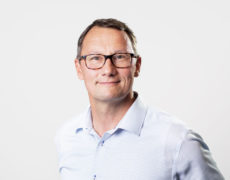
Uusin Solubiologi-lehti (1/2021) on jälleen täynnä mielenkiintoista luettavaa. Mukana on yhdistyksen uuden puheenjohtajan, Johanna Matilaisen terveiset, tiedeartikkeleina nähdään Anna Nylundin ruotsinkielinen ”Filopodiers mångsidiga funktioner” ja Helena Vihtiset ”Elektronimikroskopiaa kolmiulotteisesti”. Kuukauden solubiologina haastatellaan Suomen Akatemian tutkijatohtori Elina Mäntylää.
Lisäksi mukana ovat tuttuun tapaan Proffan suusta – tällä kertaa John Eriksson kirjoittaa biokuvantamisen kehittymisestä – ja Sanna Turusen kolumni ja tiedonjyvät, joissa kurkistetaan mm. tekoälyyn. Viimeisenä, mutta ei suinkaan vähäisimpänä, on esittelyssä Aiforia Technologies Oy.
Joko luit lehden?
Mikäli haluat tutustua lehteen tai tilata sen itsellesi, niin otahan yhteyttä!
Cepheid is a molecular diagnostic company dedicated to improving healthcare by developing, manufacturing and marketing accurate yet easy-to-use molecular systems and tests. By automating highly complex and time-consuming manual procedures, the company’s solutions deliver a better way for institutions of any size to perform sophisticated genetic testing for organisms and genetic-based diseases. Through its strong molecular biology capabilities, Cepheid is focusing on applications where accurate, rapid and actionable test results are needed most, such as managing infectious diseases and cancer.
Make a difference in healthcare and join us on this mission!
POSITION SUMMARY:
The Clinical Solution Manager will be part of the commercial team and define, construct and deliver projects that will support the customer decision making process. The outcome will demonstrate the positive financial or resource impact to support the business of implementation of Cepheid tests in the local setting.
The successful candidate will have strong ties and understanding of clinical departments, able to articulate and measure clinical workflows and translate this to the positive impact and role that Cepheid diagnostics has on patient care.
This individual will be responsible for pre and post-sales support and continued focus on the value of Cepheid technology at a country/regional level
ESSENTIAL JOB RESPONSIBILITIES:
Responsible for visualizing and documenting the patient & associated sample / test pathways related to Cepheid tests at the country level within the health care sector
Create locally based, relevant, to the point and clear visual outputs to demonstrate outcome and showcase the impact of Cepheid tests and systems
Cooperate with multiple internal stakeholders to understand and support winning strategies and respect local differences
Develop standardized, financial calculators that capture the most critical cost elements to drive success of integration of Cepheid tests
Develop standardized tools and outputs to demonstrate best practices to drive assay demand
Cultivate and maintain long-term, and strategic working relationships within traditional and non-traditional healthcare entities, from administrative, clinical to laboratory professionals
Construct strategic business plans with commercial colleagues to achieve committed growth targets
Support & deliver presentations, reports and proposals in partnership with the commercial team on the value of Cepheid product
Develop cases that can support commercial activities, customer proof sources and partner with marketing colleagues to develop locally relevant collateral and support materials
REQUIREMENTS:
University degree in Biology, Molecular Biology, Biochemistry, with minimum 3 years of Medical Clinical experience
Previous experience in the pharmaceutical, biotech, medical or related industry is required
Expertise in infection prevention and / or other clinical areas will be strongly considered
Fluent Finnish and English, in written and spoken; any other Scandinavian language is an advantage
Strong understanding of reimbursement structure in traditional and non-traditional healthcare entities
Strong business acumen and drive to succeed in partnership with the commercial organization
Expertise with demand creation, multi-department, multi-stakeholder hospital and healthcare sales is highly desirable
Familiar with a CRM application(s) such as Salesforce.com or Microsoft CRM
Outstanding interpersonal, selling, presentation, influencing and negotiation skills
Ability to work independently, be self-motivated and sensitive to timelines and needs of both internal and external stakeholders
Travel 50%
Cepheid is part of Danaher Corporation, a global science & technology innovator committed to helping our customers solve complex challenges and improve quality of life worldwide.
At Danaher, you can build a career in a way no other company can duplicate. Our brands allow us to offer dynamic careers across multiple industries. We’re innovative, fast-paced, results-oriented, and we win. We need talented people to keep winning. Here you’ll learn how DBS is used to shape strategy, focus execution, align our people, and create value for customers and shareholders.
Come join our winning team!
When you join us, you’ll also be joining Danaher’s global organization, where 69,000 people wake up every day determined to help our customers win. As an associate, you’ll try new things, work hard, and advance your skills with guidance from dedicated leaders, all with the support of powerful Danaher Business System tools and the stability of a tested organization.
At Danaher, we value diversity and the existence of similarities and differences, both visible and not, found in our workforce, workplace and throughout the markets we serve. Our associates, customers and shareholders contribute unique and different perspectives as a result of these diverse attributes.
If you’ve ever wondered what’s within you, there’s no better time to find out.
Orion Corporation operates in more than 20 countries, where we Orionees, 3200 in total, work in all kinds of positions. Among us there are Research Scientists, Laboratory Technicians, Engineers and IT Specialists as well as people working in Production, just to mention some examples. We offer diverse and responsible jobs to our personnel in a truly multi-disciplinary work environment. We encourage people to develop their competences and offer opportunities to affect the job description and creating their own career path at Orion. We are searching for top talents who are ready to share our passion for the work that we do.
We are seeking a laboratory research assistant to join the Protein & Antibody Engineering unit.
Description of position
As research assistant you will play an important role in the unit. You will be supporting our projects and working closely together with scientists and assistants both within our own unit and cross-functionally. Your tasks will span activities from protein production to characterization, but your main focus will be on cell culture work, developing and maintaining cell lines, and producing proteins. You will have good opportunities to learn new skills and develop your competences.
Key responsibilities:
Working closely together with the team and support projects with experimental work
Maintain cell cultures
Support protein production with transient transfection of mammalian and bacterial cells
Support the team and projects with experimental work withing protein purification and characterization
Contribute to our technology development projects
Developing and maintaining laboratory protocols
Desciption of Unit
Protein & Antibody Engineering is a newly established unit and an integrated part of the Medicine Design department, which is responsible for converting new drug targets into large and small biomolecule therapeutics. The unit is tasked with the discovery and antibody engineering incl. novel formats for the treatment of diseases in Orion’s focus areas Oncology and Neurological disorders. We are involved in the projects form the early ideas until delivery of the clinical candidate. The laboratory has a fully equipped protein production facility and a wide range of characterization technologies. Expanding our capabilities and building technologies is essential for us and we are constantly exploring new ideas and implementing new methods, platforms, and technologies. The unit is currently composed of 9 scientists, 1 assistant as well as a handful of students and post doc researchers working with various aspects of protein production and characterization.
We offer
The position offers an exciting and challenging opportunity for being part of a small team with a big responsibility in one of Finlands most innovative companies. You will be working with highly motivated people in pharmaceutical industry on versatile projects and be part of building our protein and antibody capabilities for the future of Orion. Constant development and appreciation of personnel are part of our core values and we can offer attractive career development opportunities. The culture of Orion R&D is informal and we enjoy working together.
We strive for excellence in everything we do. We succeed, learn together, and appreciate each other. You’ll be empowered to deliver value. Please follow this link for Orion’s values.
Requirements
To succeed in this role you need to:
Have good hands-on experience working with cell cultures
Have experience working in a clean cell culture laboratory
Have hands-on experience working with protein samples
Be a motivated team player
Be motivated to learn and take on new challenges
Have a positive can-do attitude
Thrive well in an constantly changing environment
Additional information
Are you the person we are looking for? Please send your CV and application to us by July 5th at the latest.
For more information please contact Rune Salbo, Head of Protein & Antibody Engineering by phone +358 50 966 7718 via email rune.salbo@orionpharma.com.
Join us – together we build well-being and do work that we are proud of!
#LI-ORION
Approved medical examination which also includes drug testing is required prior to the employment.
Are you looking to join a dynamic, innovation-driven, international company, building a better future for us all? UPM leads the forest based bioindustry into a sustainable, innovation-driven, and exciting future. The competence, integrity and drive of our people make us unique. We live by our values – trust and be trusted, achieve together, renew with courage.
We are now looking for a Manager, Clinical Product Development to join our Biomedicals team in Helsinki, Finland.
Greetings from your future team leader
“We are looking for an experienced, dynamic, open minded individual with a “can-do” attitude. You will be responsible for the wound care products, but also support the developments in regenerative medicine. Since this is a new area for UPM, you will be part of the exciting development phase!” – Johana Kuncová-Kallio, Director, UPM Biomedicals
What You’ll Do
You will play a key role in the development of the regulatory route for our existing and upcoming products
You act as a product manager for FibDex® advanced wound dressing, and will be responsible for product documentation maintenance and post market surveillance
Together with the team, you will be responsible for product development including but not limited to new indications of FibDex® advanced wound dressing and other products for wound healing
You will also support new product development for regenerative medicine and pharmaceutical products
You will be responsible for regulatory documentation and related quality management processes and reporting
Who You Are
You have a university science degree, understanding of wound healing or regenerative medicine mechanisms and a minimum 5 years of relevant work experience, ideally in industry
A background in biomaterials is seen beneficial
You have a deep understanding and working knowledge of ISO 13485, QC, GMP, MDR practices, document management and associated country registration requirements
You have previous experience of medical device product development for the clinical market (strong preference on experience with regulating materials and devices over software) and experience in management of clinical trials
Experience from internal auditing, especially medical devices audits, is also an advantage
You have proven business acumen and working knowledge of the industry and supplier base
You have excellent communication and problem-solving skills and are able to work independently
You are a positively thinking, solution oriented, multitasking and proactive team player
You are fluent in written and spoken English
This Is What We Offer For You
Meaningful job: We are proud of what we do. Saving patients’ lives, developing a new area of UPM, working in a company with high values.
Inspired and motivated teams: In the Biomedicals team, you will be working with great people. UPM is a multifaceted, international organization that works as a team to achieve our shared objectives.
Development opportunities: We work together on advancing your career. We provide opportunities to support your development throughout every stage.
Responsibility for people and environment: Our ethical principles embrace people as well as the environment. We are always striving to build a more sustainable future.
Additional Information
The main location for this position is Biomedicum 2U, Tukholmankatu 8, Helsinki. Other locations, where you will work time-to-time, include the headquarters of UPM at Alvar Aallon katu 1, Helsinki and the North European Research Center in Lappeenranta.
For further information about the position, please contact your future manager Kaija Ojala, Business Development Manager, Clinical tel. +358400883440, on Tuesday 29.6.2021 at 9-12 (EET), or Wednesday 30.6.2021 at 11-14 (EET) or your future colleague Kari Luukko, Director, Quality Assurance, tel. +358400259866, on Tuesday 22.6.2021 at 12-15 (EET) or Wednesday 23.6. at 13-16 (EET).
Please send your application via the link by 15.7.2021. We will start going through the applications already during the application period, so please submit your application as soon as possible.
For support with submitting your application, please contact the HR Service Center at careers@upm.com or tel. +358204146600. If you are a UPM employee you can reach us through the UPM Service Portal: [LINK].
A security background check may be performed for those selected to UPM positions, in accordance with the company recruitment guidelines and the Security Clearance Act 726/2014.
UPM is a non-smoking workplace in Finland.
UPM Biomedicals is the forerunner in producing high quality nanofibrillar cellulose for medical and life science applications. More than 300 patents protect the existing and future products that rely on the Finnish birch pulp. We actively collaborate with universities, research centres and key industrial partners on innovations and products in the field of high throughput drug screening, personalized medicine, advanced cell therapies, 3D bioprinting, tissue engineering and wound care. www.upmbiomedicals.com
We deliver renewable and responsible solutions and innovate for a future beyond fossils across six business areas: UPM Biorefining, UPM Energy, UPM Raflatac, UPM Specialty Papers, UPM Communication Papers and UPM Plywood. As the industry leader in responsibility we are committed to the UN Business Ambition for 1.5°C and the science-based targets to mitigate climate change. We employ 18,000 people worldwide and our annual sales are approximately EUR 8.6 billion. Our shares are listed on Nasdaq Helsinki Ltd. UPM Biofore – Beyond fossils. www.upm.com
Meillä on syksyllä tarvetta sinulle, joka olet innostunut laittamaan jalkasi oven väliin, kun rakennat tulevaisuuden työuraasi.
Sinulla on Immuno Diagnostic Oy:n liiketoimintaa ajatellen sopiva tausta esim. kliinisen mikrobiologian, elintarvikekemian, molekyylibiologian tai biokemian alueelta. Sopivan taustan lisäksi sijaisuus edellyttää hyviä vuorovaikutus- ja yhteistyötaitoja, itsenäistä työotetta sekä innokkuutta ottaa vastaan uusia haasteita.
Hakijan tulee täyttää vuorotteluvapaan sijaiselle asetetut TE-keskuksen kriteerit. Tarjoamme sinulle hyvän perehdytyksen, modernit työkalut sekä mahdollisuuden oppia uutta. Mikäli tarpeemme sopii syksyn suunnitelmiisi, lähetä vapaamuotoinen hakemuksesi ja CV:si osoitteeseen rekry@immunodiagnostic.fi. Lisätietoja antaa toimitusjohtajamme Tomi Virtanen (puh. +358-40 501 2055), kysymyksiä voi esittää myös rekry-sähköpostiin.
Haemme Työympäristölaboratoriot-yksikköön Kuopion toimipisteeseen
ERITYISASIANTUNTIJAA
Työterveyslaitos tarjoaa laajan valikoiman tutkittuun tietoon perustuvia työympäristön analyysipalveluita, puolueetonta neuvontaa ja moniammatillisia ratkaisuja. Työterveyslaitoksen laboratoriotoiminta on FINAS-akkreditointipalvelun akkreditoima testauslaboratorio T013 (SFS-EN ISO/IEC 17025:2017) ja laboratoriollamme on myös Ruokaviraston hyväksyntä asumisterveyteen liittyvissä määrityksissä.
Tehtävänäsi on tuottaa akkreditoidussa laboratoriossa laadukkaita mikrobiologian sekä pöly- ja kuituanalytiikan laboratoriopalveluita sisäisille ja ulkoisille asiakkaille. Tehtävänäsi on analysoida palvelunäytteitä, tunnistaa mikrobeja näytteistä, osallistua asiakkaiden konsultointiin ja kehittää menetelmiä. Lisäksi tehtävä sisältää akkreditoidun toiminnan kehittämistä ja ylläpitämistä.
Odotamme sinulta ylempää korkeakoulututkintoa sekä monipuolista perehtyneisyyttä sisäympäristön analytiikkaan. Arvostamme mikrobiologin, biologin tai vastaavaa koulutusta, sekä aiempaa kokemusta mikrobien tunnistamisesta, asbestianalytiikasta, kokemusta akkreditoidun toiminnan ja analytiikan kehittämisestä ja palvelutyöstä. Työ edellyttää erinomaista suomen kielen taitoa, oma-aloitteista asennetta, hyviä vuorovaikutustaitoja sekä yhteistyökykyä.
Tarjoamme sinulle monipuolisen ja haastavan työn sekä hyvät mahdollisuudet kehittää omaa osaamista. Käytössäsi ovat kattavat työsuhde-edut, joihin kuuluvat mm. laaja työterveyshuolto, liikunta- ja kulttuurietu sekä mahdollisuus käyttää tunti työaikaa viikossa liikuntaan.
Työsuhteesi on vakituinen ja alkaa 1.9.2021 tai sopimuksen mukaan. Palkkaus määräytyy Työterveyslaitoksen työehtosopimuksen mukaan. Noudatamme kuuden kuukauden koeaikaa.
Kiinnostuitko? Täytä hakemuksesi ansioluetteloliitteineen viimeistään 20.8.2021, osoitteessa www.ttl.fi/rekry. Aiemmat hakemukset aikavälillä 4.5.–6.6.2021 vapaana olleeseen erityisasiantuntijan tehtävään Kuopiossa huomioidaan.
Lisätietoja tehtävästä antavat johtaja Sirpa Pennanen, puh. 030 474 7234 sekä tuotepäällikkö Maija Kirsi, puh. 030 474 7024 tai sähköpostitse etunimi.sukunimi@ttl.fi.
We are now looking for a motivated Doctoral student in a project addressing the roles and molecular interactions of collagen XIII (ColXIII) in the neuromuscular junction (NMJ).
Description
Applications are invited for a full-time Doctoral student (max. 4 years) position, starting at the earliest on 1.10.2021 in a research project headed by Professor Taina Pihlajaniemi in the Extracellular matrix & Hypoxia Research Unit, operating at the Faculty of Biochemistry and Molecular Medicine. Molecular and environmental basis for lifelong health is one of the strategic focus areas of the University. The doctoral student is enrolled in the Health and Bioscience Doctoral Programme of the University of Oulu Graduate school, which provides support in theoretical and practical training.
We are now looking for a motivated Doctoral student in a project addressing the roles and molecular interactions of collagen XIII (ColXIII) in the neuromuscular junction (NMJ). Using murine models we have shown that ColXIII is an essential NMJ component and others have recently shown that mutations in the human gene cause congenital myasthenic syndrome type 19 (CMS19). Using mouse and cell culture models we will identify the network of molecules and the events whereby ColXIII operates in the normal NMJ and the developmental events that lead to CMS19. We will also determine the occurrence of anti-ColXIII autoimmune antibodies in patients with acquired generalized and ocular myasthenia gravis and assess their effects on the NMJ. The studies provide unique opportunities to enhance the understanding of critical motor synapse molecules and facilitate personalized therapies in genetic and acquired myasthenia. The position is fixed-term for 4 years in an Academy of Finland-funded project and it targets to completion of a Doctoral thesis and multiple publications in high-ranked international journals. Besides research, the position includes some teaching duties in an international Master’s Programme in Biochemistry.
Qualification requirements
The successful candidate for the Doctoral student position must possess a M.Sc. degree in the field of biochemistry, molecular or cell biology, medical science or related fields. We also invite applications from pre-graduate students from these fields of university studies. In this case, to be eligible for application, the candidate must demonstrate that he/she will graduate at home University not later than 31.12.2021 and also provide 1) an official statement from the home University attesting that all the courses, exams and other qualifications needed for graduation have already been obtained, 2) an official statement from the home University attesting that thesis has been submitted for evaluation and, 3) a letter of support from the candidate’s Supervisor (the minimum acceptable level for supervision is docent / assistant professor).
Prior experience in molecular biology and cell culture-based experiments is required, and proficiency in microscopy is expected. Prior experience in generating or working with experimental mouse models, and knowledge of the research field in question is considered an advantage. Good communication and teamwork skills are appreciated. Fluency in both written and spoken English is required. Most importantly, we expect the candidate to have a high motivation to conduct high-level biomedical research.
What we offer
We offer a research environment with excellent technological facilities and a motivating and supporting international community at the Faculty of Biochemistry and Molecular Medicine, University of Oulu. We can also offer access to state-of-the-art facilities and special expertise through visits to collaborative laboratories outside Oulu when needed. You will have a place in a highly talented research group, working to solve globally significant research problems. University´s wide variety of support services are at disposal, allowing to focus on studies and research work. The position is fixed-term for 4 years as of 1.10.2021 or as soon as possible thereafter. A trial period of 6 months is applied in the position.
Salary
The initial salary for the new Doctoral student will be based on the demand level 2 of the national salary scale for teaching and research personnel of Finnish universities. In addition, a salary component based on personal work performance will be paid (maximum of 50 % of the job-specific component) and upgraded based on qualification in research work and progress in PhD studies. In practice, the salary of a new doctoral student will be roughly 2300-2500 € / month before taxes. The salary will be evaluated yearly.
How to apply
Applications, together with all relevant enclosures, must be submitted using the electronic application form by August 15, 2021, at 23:59 (Finnish local time, EEST), with the following attachments as three separate pdf files:
1. Complete CV containing contact information of at least two referees (Max. size limit of the attachment: 5 Mbytes)
2. Motivation letter summarizing professional experience and expertise, reasoning interest in this position and describing career plans (1-2 pages; max. size limit of the attachment: 2 Mbytes).
3. Certificates/Diplomas: Scanned electronic copies of diplomas and transcripts of the records of relevant previous degrees. For the candidates who do not yet hold the M.Sc. degree, please provide: 1) an official statement from the home University attesting that the coming graduation date of the candidate is 31.12.2021 at the latest; 2) an official statement from the home University attesting that all the courses, exams and other qualifications needed for graduation have already been obtained; 3) an official statement from the home University attesting that thesis has been submitted for evaluation and, 4) a letter of support from the candidate’s Supervisor (the minimum acceptable level for supervision is docent / assistant professor). (Max. size limit of the attachment: 2 Mbytes)
Only applications containing all relevant appendices and submitted through the online recruitment system will be considered. Top candidates will be invited to an on-site or remote interview. Applications sent by email will not be considered. The eligible applicants fitting best in the research profile expected for the position may be invited to an on-site or remote interview. All applicants will be notified when the selection process is completed.
Further information
For further information, please contact Prof. Taina Pihlajaniemi, e-mail: taina.pihlajaniemi (at) oulu.fi or Dr. Anne Heikkinen; e-mail: anne.heikkinen (at) oulu.fi
Artikkeli on julkaistu myös Solubiologi-lehden numerossa 1/2021.
Hyvä Suomen Solubiologit ry:n jäsen/seuraaja!
Suomen Solubiologit ry sai helmikuussa uuden hallituksen, ja tällä kertaa myös uuden puheenjohtajan. Elina Siljamäki on luotsannut hallitusta ja koko yhdistystä erittäin ansiokkaasti vuodesta 2013 lähtien, jolloin olin jo itsekin mukana hallituksessa. Tähän saakka olen hoitanut tiedotussihteerin tehtäviä ja seurannut, kuinka hienosti Elina on kehittänyt yhdistyksemme toimintaa. Kuluneisiin vuosiin on mahtunut lukemattomia seminaareja, tapahtumia, kokouksia ja yhdistykselle muitakin tärkeitä merkkipaaluja. Elinan aikana on muun muassa päivitetty yhdistyksen nettisivut, rakennettu jäsenintra ja järjestetty tieteellinen yhteisseminaari Suomen Sidekudostutkijat ry:n kanssa helmikuussa 2020. Toimintaamme seuranneet voivat varmasti olla samaa mieltä siitä, että Elina on tehnyt erittäin hyvää työtä, minkä ansiosta yhdistyksemme on tullut monelle tutuksi. Kiitos siis, Elina, kuluneista vuosista sekä siitä, että saamme pitää sinut hallituksessa mukana!
Olette varmastikin huomanneet, että Suomen Solubiologit on viime vuosina lisännyt näkyvyyttään sosiaalisessa mediassa – meidät löytää nykyään nettisivujen lisäksi myös Facebookista, Instagramista ja Twitteristä. Näin pyrimme tulemaan tutuiksi alan opiskelijoille, työntekijöille, yliopistoille ja erilaisille organisaatioille koko Suomen alueella. Sen perusteella, mitä olen organisaatioviestinnästä oppinut, tärkeää on viestiä juuri siellä, missä tärkeät kohderyhmät viettävät aikaansa. Sen perusteella, että nykyinen hallituslaisemme Terhi Heino löysi meidät alun perin juuri Instagramin kautta, voidaan työn nähdä jo kantavan hedelmää. Toivon, että pystymme kehittämään viestintäämme niin, että voimme tarjota teille jatkossa yhä mielenkiintoisempaa sisältöä, ja että meidät löytänyt henkilö päätyisi tutustumaan toimintaamme tarkemminkin. Suuri yhdistyksen ylpeyden aihe on myös Solubiologi-lehti, jota päätoimittaja Jenny Joutsen on uudistanut viime vuosina toimituskunnan kanssa. Solubiologi on tyylikäs, ajankohtaisia aiheita käsittelevä julkaisu, ja tiettävästi myös ainoa suomen kielellä artikkeleita julkaiseva alan lehti. Tällä tavoin teemme omalta osaltamme työtä tieteen popularisoinnin hyväksi.
Yksi tärkeä tehtävämme on toimia yhdyssiteenä alan opiskelijoiden ja työelämän välillä. Tämän toteuttamiseksi olemme jo vuosia tiedottaneet alan avoimista työpaikoista nettisivuillamme ja sosiaalisen median kanavissamme. Se on selkeästi ollut tehokasta: hallituslaiset ovat useaan otteeseen kuulleet, että moni on saanut tiedon avoimesta työpaikasta ensin nimenomaan meidän kauttamme. Hienoa on myös se, että rekrytoivat tutkimusryhmät ja yritykset ottavat meihin suoraan yhteyttä ja pyytävät mainostamaan avoinna olevaa työ-, opiskelu- tai harjoittelupaikkaa. Kunniajäsenemme Jari Rantamäen sanoin: Silloin kun yhdistykseen otetaan yhteyttä jonkin asian tiimoilta, niin silloin on tehty jotakin oikein. Tämä on mielestäni konkreettinen osoitus siitä, että todella toimimme molemminpuolisena yhdyssiteenä opiskelijoiden ja jäsentemme sekä työelämän välillä. Yksi tavoitteistani on, että yhdistyksemme keksii tulevaisuudessa muitakin tapoja toteuttaa tätä tehtävää, jolloin voimme omalta osaltamme tukea alan opiskelijoiden ja jäsentemme työllistymistä.
Haluan vielä kerran kiittää kunniasta toimia tämän hienon yhdistyksen puheenjohtajana – lupaan kehittää Suomen Solubiologien toimintaa parhaani mukaan, yhdistyksen arvokkaita perinteitä kuitenkaan unohtamatta!
A three-year Postdoctoral Researcher position in Population Genomics is available in the Ant Genomics and Immunity group (https://lumiviljakainen.wordpress.com/).
In this project, funded by the Academy of Finland, we will study genetic underpinnings of convergent evolution of multi-queen colonies (polygyny) in ants. We will investigate genomic architecture and selection across the genomes of monogynous and polygynous ant species using whole-genome sequencing. In addition, immune gene evolution will be studied in these ant societies to decipher whether polygynous lineages have followed similar evolutionary trajectories after convergent evolution.
Open position
the main duties of the successful candidate are bioinformatics and population genomic analysis of whole-genome sequence data of several ant species and dissemination of research findings
other tasks include supervision of Ph.D. and M.Sc. students
Qualification requirements:
Ph.D. in biology, obtained less than 10 years ago
Experience in population genetics, high-throughput sequence data and bioinformatics
Ability to work both independently and in a team, and supervise graduate and undergraduate students
Fluency in both written and spoken English
What we offer
We offer you a place in an ambitious research group with excellent international collaborators
University´s wide variety of support services are at your disposal, allowing you to focus on your research
In addition to modern research facilities, we offer you personnel benefits such as free occupational healthcare, affordable sport services and endless opportunities to develop your skills and competences
Regular salary is paid 12 months per year, including paid leave and an additional holiday bonus in the summer
The successful candidate will also receive benefits provided by the Finnish government to residents, for example possibility to obtain access to the national healthcare system, tax benefits for employees with children and high-quality, affordable childcare services.
Salary
A salary in accordance with the Finnish universities salary system (for teaching and research personnel): level 5. In addition, a salary component based on personal work performance will be paid (maximum of 50% of the job-specific component). Starting gross salary will be approx. 3500€ per month. A trial period of six months is applied in the position.
How to apply
Applications, together with all relevant enclosures, should be submitted using the electronic application form by 30th of June 2021. The application should be written in English and include the following:
1) A motivation letter (max. 2 pages) summarizing applicant’s professional experience and expertise and describing why applicant is interested in this position. Also, information on personal research interests, experience and career plan may be provided here
4) Certificates/Diplomas: Scanned copy of the original doctoral degree certificate and transcript of records and, when necessary, official translations to Finnish or English
5) Contact information of two senior/experienced researchers who may be asked to give a statement on the candidate
Only applications containing all relevant appendices and submitted through the online recruitment system will be considered. Top candidates will be invited to an on-site or remote interview.
Further information
The position is for 3 years starting in September 2021 or as soon as possible thereafter. A trial period of 6 months is applied in the position.
Please contact Dr. Lumi Viljakainen (lumi.viljakainen@oulu.fi) with any questions.
Nanoform is an innovative drug particle engineering and nanotechnology company listed on the Premier-segment of Nasdaq First North Growth Market in Helsinki and Stockholm. Nanoform works together with pharma and biotech partners globally to reduce attrition in clinical trials and enhance their molecules’ formulation performance through its nanoforming services. Leveraging our in-house developed AI engine Starmap® we can also predict which customer molecules show most promise for our technology. Nanoform’s capabilities include GMP manufacturing, and its services span the small to large molecule development space with a focus on solving key issues in drug solubility and bioavailability and on enabling novel drug delivery applications.
Quality Control (QC) Lab Technician
With the view of developing our organization further, we are now seeking Quality Control Lab Technician to support our quality control team. The position requires availability to integrate shift work regime. The job is located at our facilities in Helsinki, Finland.
You will be responsible for
Ensure that all QC analysis are carried out in an effective and accurate manner according to company standard procedures (SOPs).
Implement and develop new methods.
Maintain and calibrate laboratory equipment.
Manage reagent, material, and standards stock levels to ensure lab work continuity.
Ensure that records are done in an accurate manner as per company standards and procedures.
Support the GMP laboratory activities as per company standard procedures and Quality system.
Support current R&D projects by running appropriate analysis and sampling.
Maintain QC Databases and others relevant for QC operations
Communicate efficiently with the production and technical teams to discuss QC outcomes and improvements
Ideal experience
You have a Bsc or Msc degree in pharmacy, chemistry, microbiology, biotechnology or in an equivalent field.
You have been working with biomolecules (especially with proteins).
Experience from some of the analytical techniques: SDS-PAGE, HPLC-(SEC), immunoassays, DLS.
Working knowledge of SOPs, Pharmacopeias and GXP Regulations.
Good technical knowledge and understanding of laboratory procedures, methodology and standards.
Capacity to work independently in a laboratory environment
Capacity to produce clear records and data reports.
Experience in working in GXP environments.
Preferred experience in using electronic Quality systems (LIMS, QMS, CDS, CAPA, others).
You are used to work with MS Office programs.
Personal qualities we are looking for
You are a doer and have an accurate working style
You are flexible in working in a team as well as independently
You have an ability to work in a high-performance environment
Good English level, both written and spoken
What we offer to you
A great team to join with skilled and highly motivated colleagues
Encouraging and forward-looking team spirit
You will be part of a team that invents world-class solutions for the pharmaceutical industry
We provide extensive learning opportunities. You are able to utilize your skills and competencies widely as we continuously create something new
We like challenges and want everyone to enjoy solving them together
Competitive compensation package with broad employee benefits selection
You will get to be part of a unique start-up in the pharma industry.
Interested?
To apply for this position, please supply a covering letter and CV by 21st of June, 2021. Please note that we may already start the interviewing process during application period.